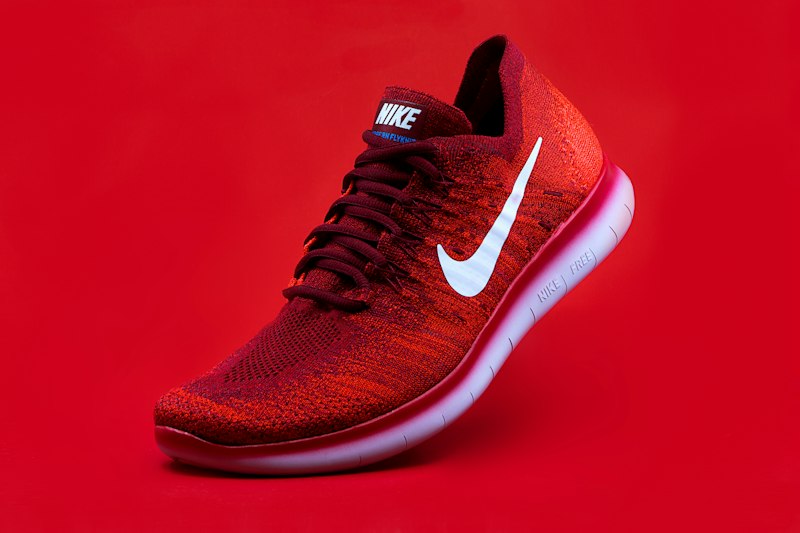
Have you ever wondered what’s actually inside a $150 (or ¥1,000) premium racing shoe? The ones with the sleek silhouette, the thick midsole, and the hype that makes you feel like you could break a personal record just by lacing them up?
Let’s cut one open — figuratively speaking — and take a look. A modern top-tier or sub-top-tier carbon plate racing shoe, when sliced open horizontally or vertically, reveals a standard “sandwich” composite system. Four core components work together to deliver that magical combination of lightweight cushioning, energy return, and forward propulsion.
Here’s the full breakdown.
1. The Upper: Less Is More
The upper is everything that wraps around your foot, and on a premium racing shoe, it’s all about extreme lightweight and breathability.
- Super-light single-layer engineering mesh or specialty knit: To shed every possible gram, the uppers of thousand-yuan shoes are often paper-thin — some are almost semi-transparent. There’s barely any thick foam padding left. What feels like a bare sock is actually a carefully engineered structure designed to hold your foot securely without adding bulk.
- Minimal heat-welded overlays and dynamic locking systems: Instead of heavy stitching, thin heat-activated patches reinforce key stress points. Hidden flywire cables (like Nike’s Flywire system) or internal band straps create a dynamic lace-up system that tightens down when you pull the laces, locking your foot in place even at 5-minute-per-kilometer pace.
There’s a reason these shoes feel so different when you first put them on — they’re built for one thing: going fast.
2. The Midsole Core: Supercritical Foam Technology
If one part defines a premium racing shoe, it’s the midsole. This is where the biggest R&D budget goes, and where the biggest performance gains are found.
What is supercritical foaming?
Traditional EVA (ethylene-vinyl acetate) foam — the stuff your old sneakers were made of — is chemically expanded. It’s cheap but heavy, and it loses its shape quickly. Supercritical foam uses a physical process instead:
- Materials: Brands use high-performance polymers like PEBA (the base material for Nike ZoomX, also known by its brand name Pebax), TPEE, or high-grade aliphatic TPU.
- Process: Carbon dioxide (CO₂) or nitrogen (N₂) is injected into the raw material under supercritical conditions — high temperature and high pressure, where the gas behaves like a liquid. When the pressure is suddenly released or the temperature changes, the gas expands within the polymer, creating a uniform cellular structure.
The results speak for themselves
Compared to traditional chemically foamed EVA, supercritical foam offers:
- Energy return rates above 80% — meaning that when your foot lands and compresses the foam, more than 80% of that impact energy is returned to you as forward momentum. Cheap EVA returns maybe 50–60%.
- Ultra-low density — less mass means less energy spent moving the shoe with each stride.
- Soft but supportive — it doesn’t bottom out or collapse, even after hundreds of kilometers.
The 40-millimeter stack height
World Athletics (the governing body of competitive running) currently allows road racing shoes up to 40mm of midsole thickness. That’s a lot of foam. The massive stack gives the foam an extremely long travel distance to compress and rebound, turning each step into a tiny spring.
3. The Soul of the Shoe: Full-Length Carbon Fiber Plate
Sandwiched between two layers of supercritical foam sits the single most talked-about component in modern running: the carbon plate.
What it actually is
A carbon plate is a rigid, one-piece composite made from thousands of carbon fiber tows — think of them as extremely fine, strong threads — that are soaked in resin and then pressed and baked at high temperature and pressure. The result is unbelievably light but has extraordinary flexural stiffness — it doesn’t bend easily, but when it does, it snaps back into shape instantly.
The geometry varies by brand
The plate is never flat. Depending on the brand’s design philosophy, it’s shaped like:
- A spade or spoon curving upward at the front, creating the “rocker” effect
- A forked or fishtail front (a popular modification in Chinese domestic carbon plates) for more independent toe splay
What it actually does (not a secret magic trick)
The carbon plate has two jobs, and neither is about “bouncing you forward” like some marketing videos suggest:
- Leverage and rocker effect: Working together with the upward-curving front of the midsole (the “rocker” shape), the plate acts as a lever. When your toes push off, the plate guides the roll from heel strike to toe-off in a smooth, continuous motion — like riding a rocking chair. Less energy is wasted adjusting your gait mid-stride.
- Prevent over-compression: Supercritical foam is soft — so soft that without the plate, it would collapse too much on toe-off and absorb the energy your calf muscles just generated. The plate acts as a rigid floor, limiting how much the foam can compress and ensuring that more of that calf power gets transferred into forward motion instead of being lost as heat.
That’s it. No magic. Just clever mechanics.
4. The Outsole: Durability Takes a Backseat
Look at the bottom of a premium carbon plate shoe, and you might be surprised by how little rubber is actually touching the ground.
- Minimal high-wear rubber patches: To keep weight down, brands don’t cover the entire outsole. Instead, they apply thin, textured rubber only at the heel strike zone and the front toe push-off zone — the two spots that see the most abrasion. Some models even let the foam touch the ground directly in the middle, sacrificing some durability for that last little bit of weight savings.
It’s a calculated trade-off. These shoes aren’t meant to last forever. They’re built for race day and hard training blocks — maybe 300–500 kilometers before the foam starts to feel flat.
The Big Picture: Why This Matters
When you put on a $150 carbon plate shoe, you’re not paying for hype. You’re paying for:
- Material science that took a decade to perfect (PEBA foam, supercritical processes)
- Precision engineering that balances stiffness and flexibility in a carbon plate
- Weight shaved from every single component, measured in single grams
- Design work that optimizes the rocker shape for a specific range of paces
The result isn’t that the shoe runs for you. It’s that the shoe stops getting in your way. Your stride becomes more efficient, less energy is wasted, and — over the course of a 5K, a half marathon, or a full marathon — that adds up to a measurable difference.
One Final Note
These shoes aren’t for everyone. If you’re a casual runner logging 20 kilometers a week for fitness, a $150 carbon plate shoe is probably overkill. The technology is most beneficial for:
- Competitive runners training for races
- People who log high weekly mileage (60+ km)
- Anyone recovering from injury who needs extra cushioning and stability
For the rest of us? A well-cushioned daily trainer with solid foam will do the job just fine.
But it’s still fascinating to know what’s inside that sleek shoe on the shelf. Sometimes, the most interesting technology is the stuff you can’t see.