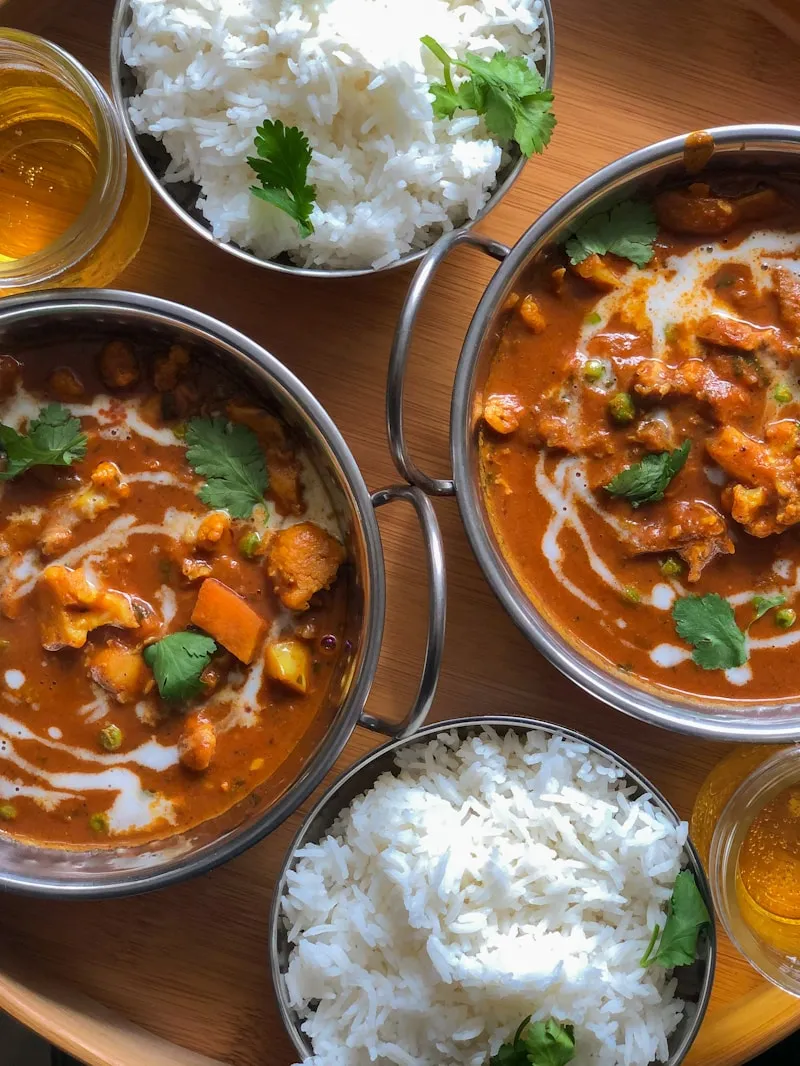
Indian cuisine is incredibly diverse, with each region offering unique flavors and techniques. Moving beyond restaurant-style curries to authentic home cooking has been a transformative culinary journey.
The Spice Box
Every Indian kitchen has a masala dabba - a spice box with essential spices:
- Cumin seeds - Earthy base
- Mustard seeds - Nutty crunch
- Turmeric - Golden color and health benefits
- Coriander powder - Citrusy warmth
- Red chili powder - Heat
- Garam masala - Aromatic blend
- Whole spices - Cardamom, cinnamon, cloves
Dal: Soul Food
Dal (lentil curry) is eaten daily in most Indian homes. It’s comfort food at its finest.
Simple Dal Tadka
Ingredients:
- Yellow lentils (toor dal)
- Turmeric, salt
- Tadka (tempering): ghee, cumin, garlic, dried chilies
The Process
- Cook lentils until soft
- Add turmeric and salt
- Prepare tadka in separate pan
- Pour sizzling tadka over dal
- Serve with rice or roti
The tadka transforms simple lentils into something magical.
Biryani: A Labor of Love
Authentic biryani is an event. Layers of fragrant rice and spiced meat, slow-cooked together.
The Technique
- Marinate meat in yogurt and spices
- Par-cook rice with whole spices
- Layer meat and rice
- Seal pot with dough
- Slow cook on low heat (dum)
The result is aromatic, with each grain of rice separate and flavorful.
Homemade Paneer
Making cheese at home seemed intimidating until I tried paneer.
Simple Process
- Heat milk to boiling
- Add lemon juice or vinegar
- Watch it curdle
- Strain through cloth
- Press into block
- Cut and use in curries
Fresh paneer is infinitely better than store-bought.
Regional Specialties
South Indian Dosa
Fermented rice and lentil crepes, served with sambar and chutneys. The fermentation gives them a tangy flavor.
Bengali Fish Curry
Mustard oil, mustard paste, and fresh fish create a distinctive flavor profile.
Punjabi Butter Chicken
The restaurant favorite, made properly at home with fresh spices and real butter.
Bread Basket
Roti/Chapati
Whole wheat flatbread, cooked on a griddle, then over open flame to puff.
Naan
Yeast-leavened bread, traditionally cooked in a tandoor. Home version uses a very hot oven or skillet.
Paratha
Layered, flaky bread, often stuffed with potatoes or other fillings.
Lessons from Indian Cooking
Layering Flavors
Indian cooking builds flavors in layers - tempering spices, sautéing onions, adding ingredients in sequence. Each step matters.
Patience
Good Indian food can’t be rushed. Slow cooking allows flavors to develop and meld.
Balance
The balance of spices is key. No single spice should dominate; they should harmonize.
Vegetarian Mastery
Indian cuisine offers some of the world’s best vegetarian dishes. It taught me that meatless meals can be deeply satisfying.
My Indian Kitchen
Now, my kitchen smells of toasted spices. I’ve learned to cook by smell and taste rather than strict recipes. The sizzle of tadka, the aroma of blooming spices, the sight of golden turmeric - these have become familiar friends.
Indian cooking has taught me that complexity doesn’t mean complication. With understanding and practice, even elaborate dishes become approachable.